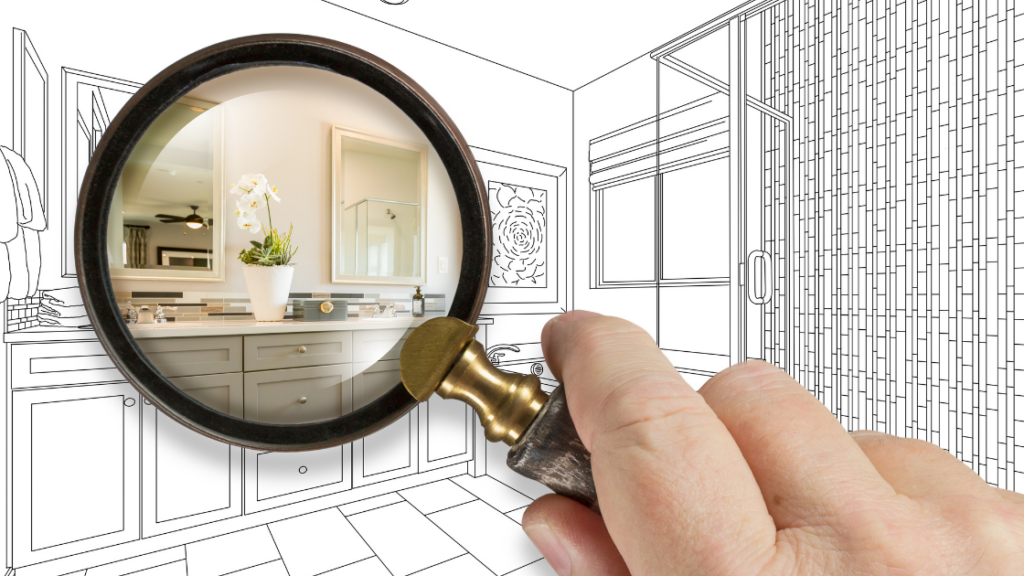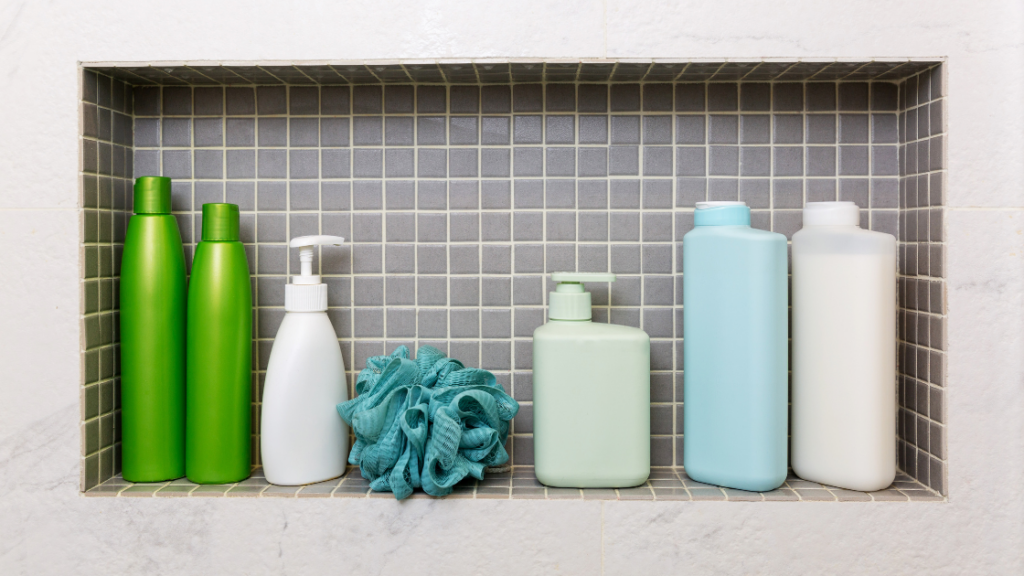

Choosing beautiful tile and the right vanity is only the beginning of a bathroom remodel.
Then come the decisions that may seem smaller:
Should the shower fixtures be Chrome, Matte Black, or Brushed Gold?
Should the vanity faucet match the cabinet hardware?
Does the towel bar need to match the shower glass hardware?
Can you mix black and gold finishes?
Can grab bars look stylish instead of institutional?
These details may seem minor when you are selecting them individually, but together they have a major impact on how the finished bathroom looks and feels.
One of the most common mistakes in bathroom remodeling is choosing each product separately. You may end up with several beautiful items that simply don’t look like they belong in the same bathroom.
A well-designed bathroom works differently.
Instead of selecting each fixture independently, start by creating a visual language for the entire space. Then use that direction to guide your choices for faucets, shower fixtures, cabinet hardware, mirrors, towel bars, grab bars, shower glass hardware, and other finishing details.
Here is how to do it.
Start With the Bathroom, Not the Faucet

One of the easiest mistakes to make is starting with small accessories.
Before deciding whether your faucet should be black or gold, look at the elements that will occupy the most visual space in the bathroom:
- Floor tile
- Shower wall tile
- Vanity
- Countertop
- Shower glass
- Wall color
These materials create the foundation of the design.
The fixtures and accessories then become the details that connect everything together.
Think of it like putting together an outfit: you usually choose the main pieces first and then add the accessories.
Bathroom design works in much the same way.
Define the Personality of Your Bathroom
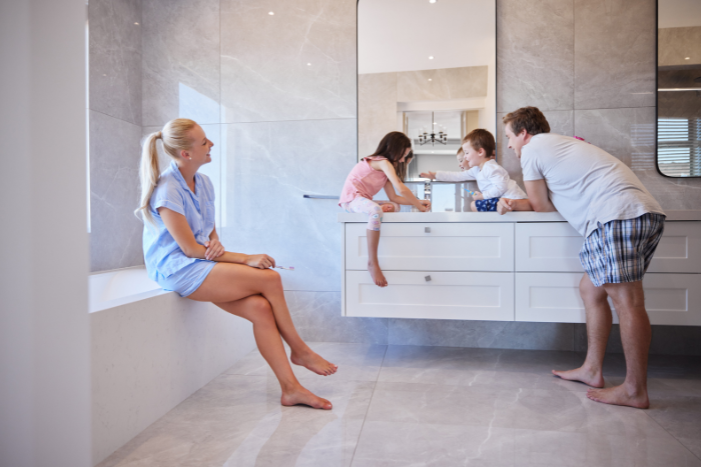
Before selecting specific products, try describing how you want the finished bathroom to feel in just a few words.
For example:
Clean and contemporary
Warm and sophisticated
Modern farmhouse
Minimalist
Spa-inspired
Classic and elegant
This simple decision can make everything that follows much easier.
A contemporary bathroom with large white porcelain tiles, a light wood vanity, and clean architectural lines may work beautifully with Matte Black or Brushed Nickel fixtures.
A warmer bathroom with natural wood, soft neutral tile, and light quartz may look stunning with Champagne Bronze or Brushed Gold.
There isn’t one finish that works for every bathroom.
The goal is to find the combination that makes sense as part of the complete design.
1. How to Choose Your Bathroom Fixture Finish
This is one of the biggest questions homeowners face during a bathroom remodel.
Chrome, Matte Black, Brushed Nickel, Stainless, Bronze, or Gold?
Each finish creates a different visual effect.
Chrome
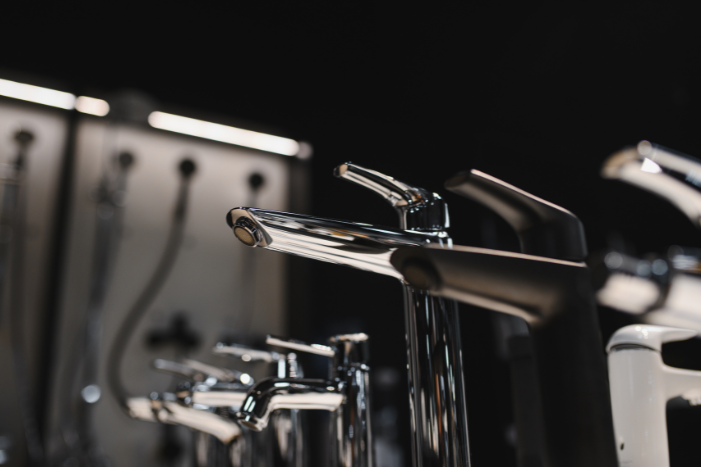
Chrome is a classic.
Its polished surface reflects light and works especially well in bright, clean bathrooms.
It can be an excellent choice when you want a space that feels:
- Clean
- Timeless
- Bright
- Modern without being overly trendy
Chrome is also widely available, which can make it easier to coordinate different fixtures and accessories.
Brushed Nickel
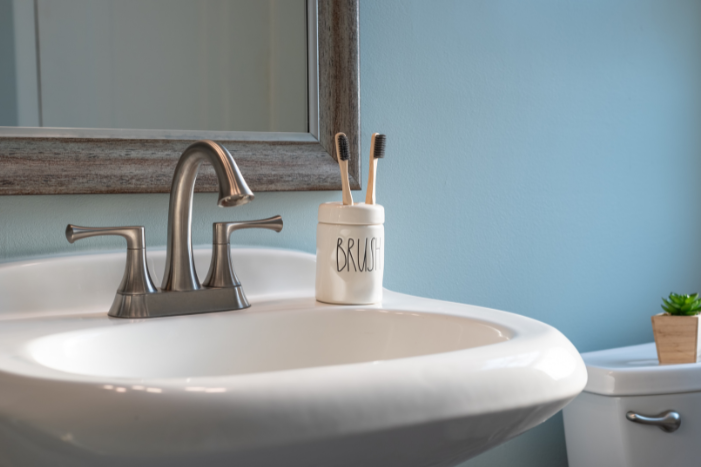
Brushed Nickel offers a softer metallic appearance.
Because it reflects less light than polished Chrome, it tends to feel more subtle and understated.
It is also extremely versatile.
Brushed Nickel works well with white, gray, wood tones, quartz, natural stone, and many different tile styles.
For homeowners who want a metal finish that complements the room without becoming the focal point, it can be an excellent option.
Matte Black
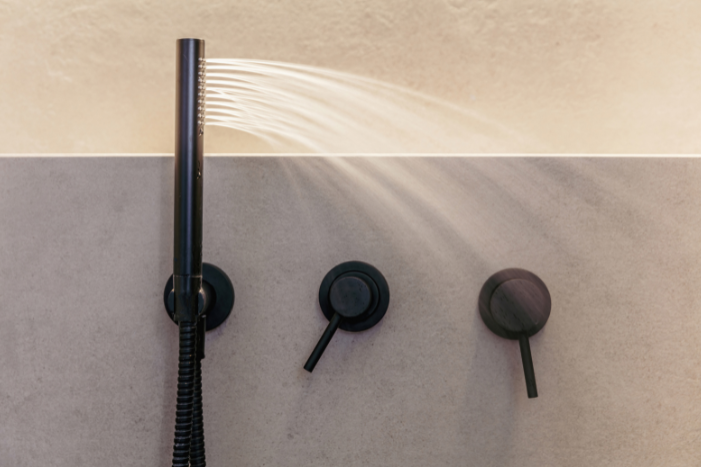
Matte Black is all about contrast.
Against light-colored tile, black fixtures create strong architectural lines.
A Matte Black shower system against white tile, for example, immediately becomes a visual feature.
This finish works particularly well in:
- Modern bathrooms
- Industrial-inspired spaces
- Minimalist designs
- High-contrast interiors
But there is one thing to keep in mind.
The more black elements you add, the stronger the visual impact becomes.
Matte Black works best when it is repeated strategically rather than automatically applied to every accessory in the room.
Champagne Bronze and Brushed Gold
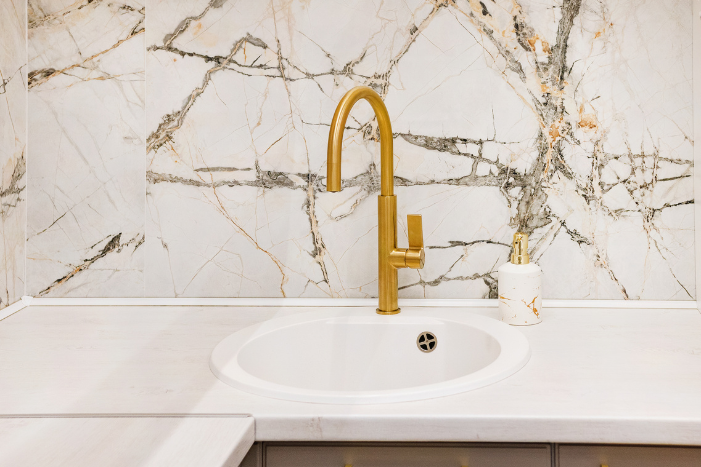
Warm metallic finishes such as Champagne Bronze and Brushed Gold can add warmth and sophistication to a bathroom.
They can pair beautifully with:
- White quartz
- Marble-look tile
- Cream
- Beige
- Taupe
- Natural wood
- Green
- Warm earth tones
When used thoughtfully, these finishes can feel elegant without making the bathroom look overly traditional.
The exact tone matters.
A soft brushed gold creates a very different impression from a highly polished yellow-gold finish.
2. Do All Bathroom Fixtures Have to Match?
No.
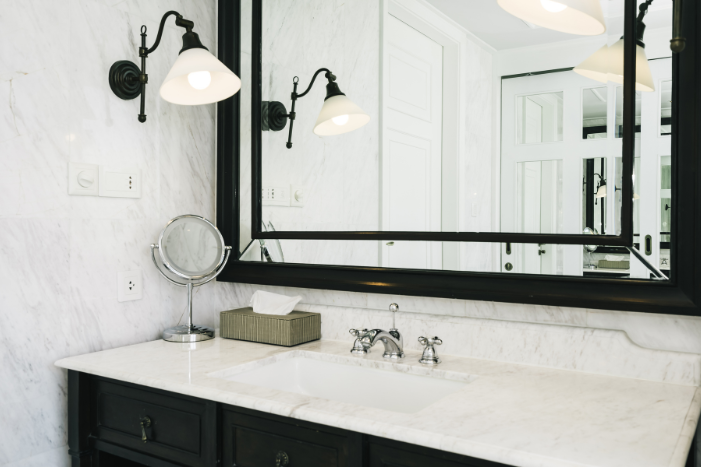
In fact, mixing metal finishes can create a more interesting and sophisticated bathroom.
But there is a big difference between intentionally mixing finishes and simply using products that don’t coordinate.
A bathroom can successfully combine:
Matte Black + Brushed Gold
or
Brushed Nickel + Matte Black
The secret is repetition.
Imagine a bathroom with:
- Matte Black shower fixtures
- Matte Black shower glass hardware
- Matte Black mirror frame
- Brushed Gold vanity faucet
- Brushed Gold cabinet hardware
Now there are two clearly defined groups of finishes.
The combination looks intentional.
The problem happens when you have Chrome in the shower, Nickel at the vanity, Gold cabinet pulls, a Black mirror, and Bronze accessories without any visual relationship between them.
The bathroom may begin to look like the products were selected at different times without an overall plan.
A Simple Rule for Mixing Metals
If you’re unsure, start with:
One primary finish + one secondary finish.
This is one of the easiest ways to introduce variety without losing visual consistency.
3. How to Choose Your Shower Fixtures

Your shower system is one of the most important functional elements in the bathroom.
Before choosing one based only on appearance, think about how you actually use your shower.
There are several options.
Traditional Showerhead
Simple, functional, and appropriate for many bathrooms.
Rain Shower
A rain shower can create a different shower experience and reinforce a spa-inspired design.
Hand Shower
A hand shower adds flexibility and can be useful for everyday bathing, rinsing the shower, cleaning, and other practical needs.
Showerhead + Hand Shower
Combining both can provide the best of both worlds: a traditional shower experience with additional flexibility.
Body Sprays
Body sprays can be incorporated into more elaborate shower systems, but they should be planned early because plumbing requirements may be different.
Don’t Choose a Shower Trim Based Only on Appearance
There is an important technical consideration homeowners sometimes overlook:
Valve compatibility.
Not every shower trim is compatible with every valve installed behind the wall.
This becomes especially important during remodeling.
If an existing valve will remain inside the wall, changing only the visible trim to a different model may not be possible without first confirming compatibility.
The shower trim and rough-in valve should be considered parts of the same system.
A decision that appears purely cosmetic can become a plumbing modification if compatibility isn’t checked before purchasing.
4. How to Choose a Vanity Faucet

The faucet is one of the first things you notice when looking at a vanity.
Proportion matters.
A small vanity can feel overwhelmed by an oversized faucet, while a large double vanity may need fixtures with a little more visual presence.
Consider:
- Faucet height
- Installation type
- Number of countertop holes
- Hole spacing
- Sink type and size
- Available space behind the sink
Appearance and functionality need to work together.
Centerset or Widespread?
This decision can also affect the overall appearance of the vanity.
A widespread faucet, with separate hot and cold handles, can create a more spacious and refined look.
A centerset or compact configuration may be better when countertop space is limited.
Most importantly, make this decision before the countertop is fabricated or drilled, when applicable.
5. Cabinet Hardware: Small Detail, Big Impact
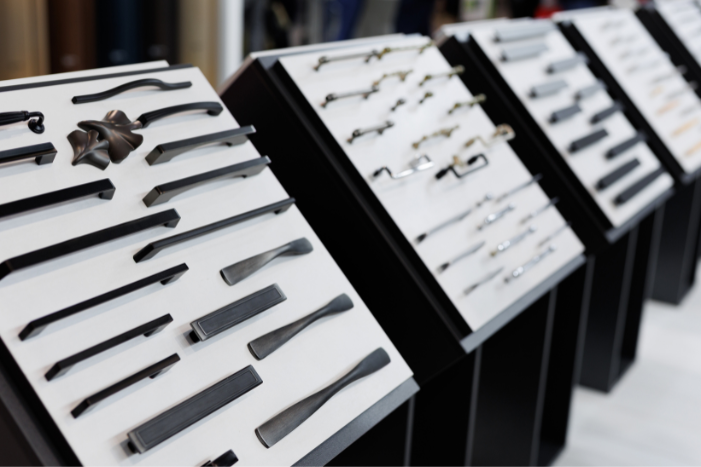
Vanity handles and knobs take up very little physical space, but they can have a surprisingly large influence on the final design.
They can match the faucet or become the secondary metal finish in the room.
Consider:
White vanity + white quartz + Brushed Gold hardware
versus:
White vanity + white quartz + Matte Black hardware.
The first combination tends to feel warmer and more elegant.
The second creates stronger contrast and a more contemporary look.
Shape matters too.
Long, clean cabinet pulls often reinforce a modern aesthetic.
Knobs and more decorative hardware can work beautifully in classic or transitional bathrooms.
Pay Attention to Scale
Don’t choose cabinet hardware based only on a close-up product photo.
Look at the actual dimensions of your doors and drawers.
A very small pull can look lost on a wide drawer.
An oversized pull can dominate a small vanity.
Proportion matters just as much as finish.
6. Towel Bars, Towel Rings, and Toilet Paper Holders
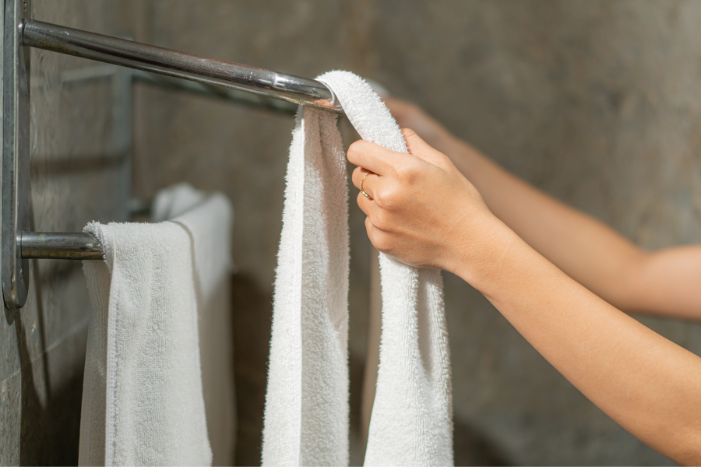
These accessories are often selected at the very end of the project.
That is exactly why they can sometimes feel disconnected from everything else.
A simple strategy is to relate them to your primary metal finish.
If the shower fixtures and faucet are Brushed Nickel, matching accessories can create visual continuity.
If you are using two finishes, these accessories can help repeat one of them throughout the room.
Placement matters too.
A beautiful towel bar installed too far from the shower isn’t very convenient.
A towel ring should make sense in relation to the vanity and sink.
Good design isn’t only about how something looks. It’s also about how well it works.
7. Grab Bars Can Be Part of the Design
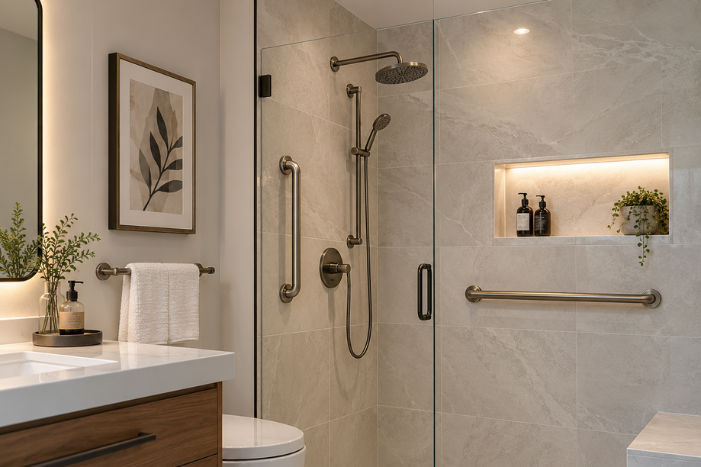
For many years, grab bars were associated almost exclusively with institutional or accessibility-focused bathrooms.
That has changed.
Today, there are options designed to integrate much more naturally into residential bathrooms.
A grab bar can coordinate with the shower fixtures and become part of the overall design rather than looking like something added afterward.
Matte Black, Brushed Nickel, Chrome, and other finishes make it possible to incorporate safety features without creating the institutional appearance some homeowners want to avoid.
There is also an important advantage to thinking about grab bars during the remodel.
Even if you don’t want to install one immediately, certain projects can be planned with appropriate support behind the wall so that adding one in the future is easier.
It is a small planning decision that can make the bathroom more adaptable over time.
8. How to Choose the Right Bathroom Mirror

A mirror doesn’t have to be just a rectangle mounted above the vanity.
It affects proportion, lighting, and the overall personality of the room.
Frameless Mirror
Creates a clean, understated appearance.
It can work especially well when other elements in the bathroom already have a strong visual presence.
Black-Framed Mirror
Creates contrast and can coordinate beautifully with Matte Black faucets, shower fixtures, or shower glass hardware.
Gold-Framed Mirror
Can repeat Brushed Gold or Champagne Bronze and add warmth to the room.
Round Mirror
A round mirror can help soften a bathroom filled with straight lines from tile, cabinetry, countertops, and shower glass.
LED Mirror
An LED mirror can add functional lighting while reinforcing a contemporary aesthetic.
But remember:
Size matters just as much as style.
A mirror that is too small above a large vanity can make the entire composition feel out of proportion.
9. Don’t Forget the Shower Glass Hardware

Shower glass is another part of the finish selection process.
In a frameless shower, the glass itself nearly disappears visually, allowing the tile to remain the focal point.
But the few visible metal components—such as hinges, handles, brackets, and other hardware—become more noticeable.
These details can coordinate with your shower fixtures.
For example:
Matte Black shower fixtures + Matte Black shower glass hardware
create an immediate visual connection.
It is a relatively small detail that can make the entire bathroom feel more intentional.
10. Use the Countertop to Connect Your Materials
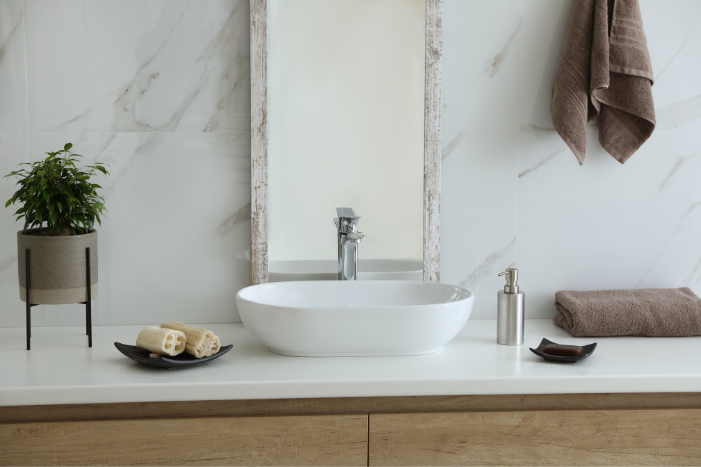
The countertop can act as a bridge between several elements in the bathroom.
A white quartz with subtle veining, for example, can provide a neutral connection between cabinetry, wall tile, and different metal finishes.
A stone with warmer undertones may coordinate beautifully with natural wood and warm metallic finishes.
This is why you shouldn’t evaluate a countertop sample by itself.
Place your samples together:
Cabinet door + countertop + tile + metal finish.
That small material combination can quickly reveal whether your selections actually work together.
11. Don’t Choose Colors Only From Your Phone Screen
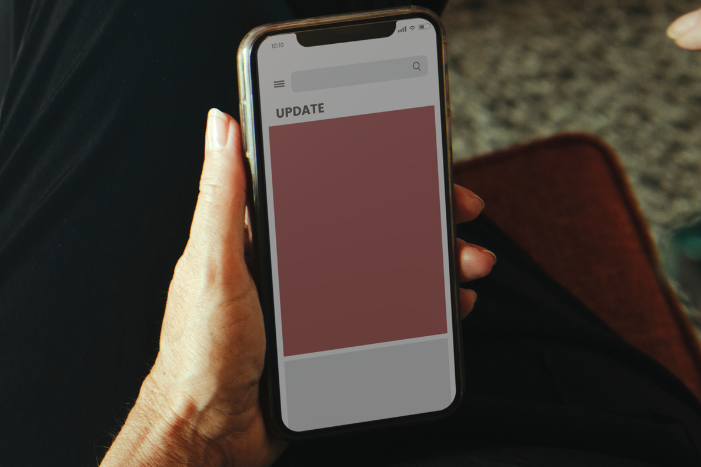
This simple tip can prevent a lot of surprises.
Colors shown online can vary because of photography, editing, lighting, and screen settings.
Brushed Nickel from one manufacturer may not look exactly like Brushed Nickel from another.
The same applies to Gold, Bronze, and even Matte Black.
When matching finishes is important, compare actual samples or products whenever possible.
This becomes especially important when using fixtures from multiple manufacturers in the same bathroom.
12. Consider Your Bathroom Lighting
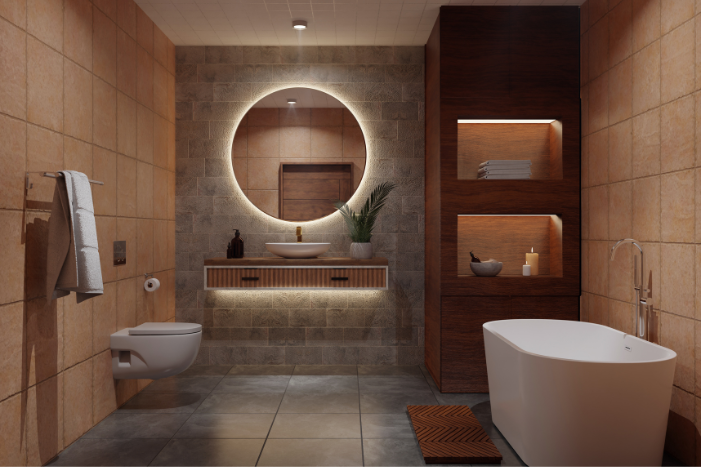
The same material can look surprisingly different depending on the lighting.
Warmer lighting tends to emphasize beige, wood, and gold tones.
More neutral lighting can emphasize whites, grays, and contemporary surfaces.
Natural light matters too.
A bathroom with a large window interacts with materials differently from an interior bathroom with very little natural light.
For that reason, materials and lighting should be considered together.
Three Bathroom Finish Combinations to Get You Started
If all these options feel overwhelming, these combinations can provide a useful starting point.
Clean & Timeless
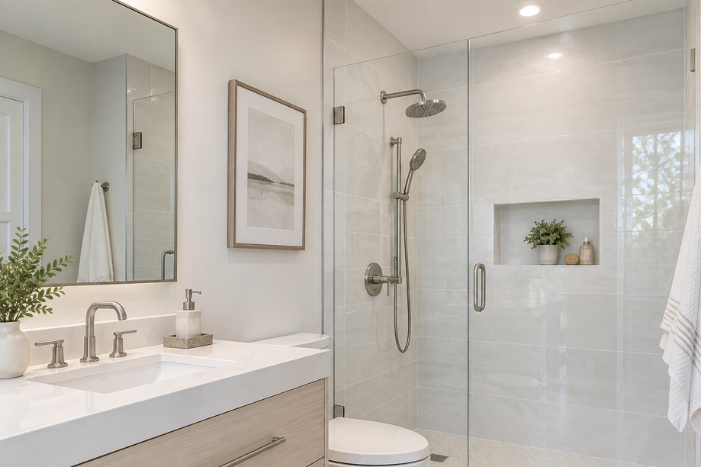
Light or white tile
White quartz countertop
White or light wood vanity
Brushed Nickel fixtures
Frameless shower glass
Simple mirror
The result is bright, versatile, and designed to age gracefully.
Modern Contrast
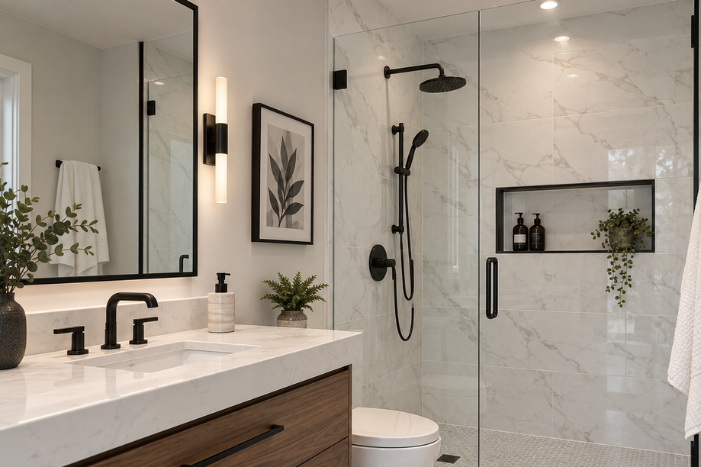
White or marble-look tile
White quartz countertop
Wood or black vanity
Matte Black shower fixtures
Matte Black faucet
Black-framed mirror
Black shower glass hardware
Here, contrast becomes an intentional part of the design.
Warm & Sophisticated
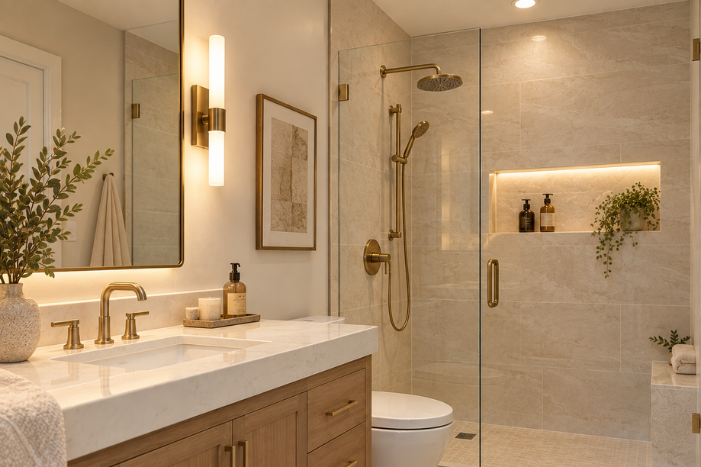
Cream, beige, or warm white tile
Warm white quartz
Natural wood vanity
Champagne Bronze or Brushed Gold fixtures
Coordinated cabinet hardware
Warm decorative lighting
This combination creates a warmer atmosphere while maintaining a contemporary appearance.
The Secret: Choose Your Bathroom Finishes in Layers
If you’re starting a bathroom remodel, try making your selections in this order:
1. Define the overall bathroom style.
2. Select the main floor and shower tile.
3. Choose the vanity.
4. Select the countertop.
5. Define your primary metal finish.
6. Choose the shower system and vanity faucet.
7. Select cabinet and shower glass hardware.
8. Complete the design with mirrors, towel bars, grab bars, and accessories.
9. Review everything together before finalizing your purchases.
Following an order like this reduces the risk of making several independent decisions and discovering later that the materials don’t work together.
Before You Buy: Create a Bathroom Material Board
You don’t need to be an interior designer to do this.
Before approving your final selections, place these items or samples next to each other:
- Floor tile
- Shower wall tile
- Vanity finish
- Countertop sample
- Faucet finish
- Cabinet hardware finish
Then take a picture.
Look at the combination again later.
Check it in natural light and under the type of lighting you plan to use in the bathroom.
Ask yourself:
Is one element drawing too much attention?
Do the warm and cool tones feel balanced?
Do the metal finishes look intentional?
Is there enough contrast?
Would I still enjoy this combination several years from now?
This simple exercise can prevent expensive decisions made on impulse.
The Most Beautiful Bathroom Isn’t Necessarily the One With the Most Expensive Materials
It is the one where the selections work together.
An expensive faucet cannot fix a poorly coordinated color palette.
At the same time, relatively simple materials can produce a beautiful result when there is consistency between the tile, vanity, countertop, fixtures, shower glass, hardware, and lighting.
Visual consistency often has a greater impact than the price of any individual product.
That is why planning should happen before purchasing.
Planning a Bathroom Remodel in Metro Atlanta?

Choosing finishes should be one of the most enjoyable parts of a bathroom remodel—not an endless series of confusing decisions.
At M&M Stone Design, we help homeowners look at the bathroom as a complete project.
That means considering how tile, cabinetry, countertops, shower fixtures, shower glass, mirrors, hardware, and accessories work together before the final selections are made.
Our goal isn’t simply to install different products in the same room.
It’s to help create a bathroom where every selection feels like part of the same design.
Start With the Design. Then Choose the Materials.
If you’re planning a bathroom remodel in Lawrenceville, Atlanta, or Metro Atlanta, contact M&M Stone Design to explore materials, finishes, and design solutions for your space.